6 March 2011

Ancient City of Pitura

The city of Pitura is referenced in cuniform inscriptions in various forms across the bas-reliefs of Ashurnasirpal II's Palace of Kalhu (in modern day Iraq). Ashurnasirpal II was king of Assyria who reigned from 883-859BC. These inscriptions, referred to as the Annals of Assur-natsir-pal, provide an invaluable picture of Western Asia in the ninth century before our era, and before Assyrian conquest had changed the political map of the country. They also detail the brutal battles of the vast program of expansion, first conquering the peoples to the north as far as Nairi, then conquering the Aramaeans between the Khabur and the Euphrates Rivers.

Here is the translated inscription that mentions the city of Pitura from the Annals of Assur-nastir-pal, Column II, lines 104-110. (Source: RECORDS OF THE PAST New Series):

104. I crossed the TIGRIS. All night I pursued (my way). To the city of PITURA the stronghold of the DIRRANS I approached. The city was very difficult (of access).

105. Two walls surrounded (it). Its citadel was situated like the peak of a mountain. Through the hands supreme of ASSUR my lord, (and) with the might of my armies and my vehement battle,

106. I fought with them. After two days, towards midday I roared upon them like RIMMON the inundator of the plain. I rained destruction upon them. With violence

107. and power my fighting-men flew upon them like the vulture. I captured the city; 800 of their fighting-men I slew with weapons; their heads

108. I cut off. Many soldiers I took alive with the hand; the rest of them I burned with fire. Their heavy spoil I carried away. A pyramid of the living (and) of heads

109. I built up at the entrance to its chief gate. I impaled 700 men upon stakes at the approach to their great gate. The city I overthrew, dug up (and) reduced to a mound and ruin. Their young men

110. (and) their maidens I burned as a holocaust.

And then can you believe I found a map of Northwestern Mesopotamia according to Assyrian Inscriptions. You can see the city of Pitura on the far right.


This map and the following excerpt description of the area called Alzi is from "Researches in Assyrian and Babylonian geography" published 1908 by University of Chicago Press in Chicago.

That king had again to recapture the land of Alzi, and he reaches
it, coming from the city of Pitura, through the mountain pass of
Alzi, and from this land he proceeds to the lands of Suhni and
Daiaeni. The city of Pitura was only a night's march from
Tusba, which was located on the southern shore of the Tigris,
opposite the mouth of the river Kallama, and the city of Pitura
was most probably located on the western shore of this river, a
little north of the city of Arbaki. The land of Subni or
Subme was situated on the northern shore of the Euphrates,
opposite Enzite, Kireki and Alzi. All the inscriptions of
Shalmaneser II agree, that this king did not cross the Tigris on
his march from Pitura to Suhme and Daiaeni, and that Alzi
must consequently lie east of the Tigris.

Based on this map, and using the Euphrates and Tigris River as reference, this would put the city of Pitura in what we know today as Turkey - which starts to correlate with further references of a city of Pitura in Kizzuwantna, which was an ancient Anatolian kingdom in the second millennium BC. There is also speculation derived from a 1440BC document that the city of Pitura is around the Yumuktepe (burial mounds) close to modern-day Mersin, Turkey. There has been much archeaology work done in this area and I look forward learning more about Kizzuwanta.

Understandably, translation plays a big part in if there actually was an ancient city of Pitura thousands of years ago, and then of course if it has anything to do with our Pitura surname. Regardless, it's now a story to share.

21 February 2011

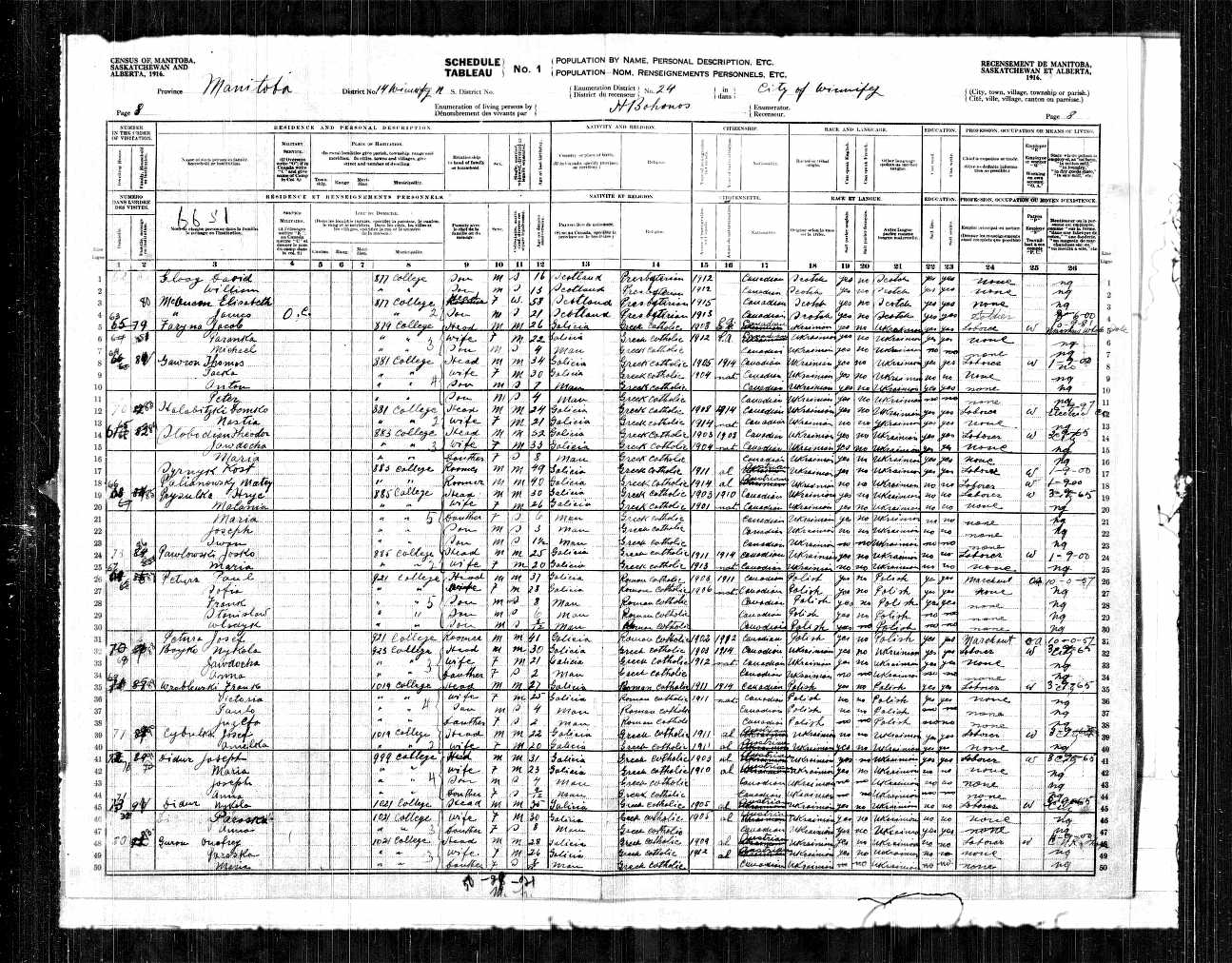
1916 Canada Census of Manitoba, Saskatchewan, and Alberta

I have found 36 entries with the name Pitura / Petura in the 1916 Canada Census of Manitoba, Saskatchewan, and Alberta. This census details the number of family in household, name of each person in family, military service, place of habitation, relation to head of household, sex, marital status, age, country or place of birth, religion, year of immigration to Canada, year of naturalization, nationality, race, language, can read and write, occupation and employment.

The families listed on the first 5 documents are accounted for in our family tree. The remaining are not. Please leave a comment if you have any information.

1) Manitoba, Winnipeg North - 24 - 8:


Listed: Paul Petura (head), Sofia Petura (wife), Frank Petura (son), Stanislaw Petura (son), Wladyk Petura (son), Josef Petura (roomer).

This is my grandfather, Stanley Pitura's family whom we have always known as Pitura, rather than Petura. Interesting, but I assume it's just an error. My great-grandfather, Paul Pitura, is listed as a merchant/owner (grocery store business), and as we know, shortly after this census moved to southern Manitoba to farm with his sons in the Domain area.

2) Manitoba, Dauphin - 16 - 15:


Listed: John Pitura (head), Maria Pitura (wife), Polly Pitura (daughter), Josefa Pitura (daughter), Aneila Pitura (daughter), Franek Pitura (son).

John Petura and family settled in Ethelbert, Manitoba area on land that was donated by Mary's mother, Pauline Bihun. They had a total of 10 children. This is also another example of the Pitura / Petura name game!

3) Manitoba, Dauphin - 19 - 13:


Listed: Michael Pitura (head), Marria Pitura (wife).

Michael came to Canada and spent time in Quebec, Ontario, Manitoba and Saskatchewan. In 1914 he visited his uncle John Petura in Mink Creek (Ethelbert, Manitoba area) where he settled as well as married Mary.

4) Saskatchewan, Prince Albert - 02 - 1:


Listed: Albert Pitura (boarder).

Albert came to Canada in early 1900s and most of the earlier years were spent working in Alberta and according to this census in a saw mill in Saskatchewan. After he was injured he moved to Manitoba and remained there until his death in Ethelbert. I assume he must be related to the other Ethelbert Pituras (John Peter Family and Michael Pitura Family), however I'm not sure how.

5) Manitoba, Winnipeg North - 21- 34:


Listed: Pawlo Pitura (head), Barbara Pitura (wife), Mike Pitura (son).

Son of Tomasz Pitura, Paul and Barbara had four sons of their own Peter, Walter, Michael and Joseph in McMunn, Manitoba.

6) Manitoba, Winnipeg North - 21 - 58:


Listed: Eudokia Petura (head, widow), Maria Petura (daughter), Anna Petura (daughter), Frank Petura (son), Aneila Petura (daughter).

7) Manitoba, Winnipeg North - 15 - 9:


Listed: John Pitura (head), Marie Pitura (wife), Jesophine Pitura (daughter).

8) Manitoba, Springfield - 10 - 33:


Listed: Robert Petura (head), Ledca Petura (wife), Paul Petura (son), Peter Petura (son), Carrow Petura (son), Joe Petura (son), Laura Petura (daughter), Annie Petura (daughter), John Petura (brother).

9) Alberta, Calgary West - 14c- 16:


Listed: Jacob Pitura (lodger).

It's hard to read, but the location is Castle Internment Camp, where Jacob Pitura was interned (a prisoner).

Established July 13, 1915, the Castle Mountain Internment Camp was by far the largest internment facility in the Canadian Rockies, housing several hundred prisoners at any one time. A total of 660 enemy aliens were interned at the facility during its entire operation. Designated enemy aliens under Canada’s War Measures Act (1914), some 8,579 enemy aliens were interned during the Great War as prisoners of war. Ostensibly nationals of countries at war with Canada, the vast majority however were settler immigrants, primarily of Ukrainian ethnic origin. Despite their civilian status, a great many were sent to prisoner of war camps located in the Canadian hinterland, to be used as military conscript labour on government work projects. Of particular note was the use of forced labour in Canada’s national parks, where they were introduced there as a matter of policy to improve existing facilities and increase accessibility by developing the park system’s infrastructure. By 1915 several internment camps in and around the Rocky Mountains were in full swing, including a camp at the foot of Castle Mountain, the terminal point of the then uncompleted Banff-Laggan (Lake Louise) road.

August 1917 when the camp was finally closed, the internees were conditionally released to industry to meet the growing labour shortage. The Castle Mountain camp was a difficult facility to administer. Abuse was widespread, and although duly noted by the Directorate of Internment Operations in Ottawa, never corrected. Escapes were frequent while conditions at the camp were roundly condemned by neutral observers and the Central Powers, charging Canada with violations of international norms governing the internment of enemy aliens. Understandably, the conditions at the camp would become of interest to the War Office in London and a point of discussion between the British Government and Ottawa.

The Ukrainian Canadian internment was part of the confinement of "enemy aliens" in Canada during and for two years after the end of the First World War, lasting from 1914 to 1920, under the terms of the War Measures Act that would be used again, in the Second World War, against Japanese Canadians; and in 1970, against some Québécois (during the "October Crisis"). About 4,000 Ukrainian men and some women and children of Austro-Hungarian citizenship were kept in twenty-four internment camps and related work sites – also known, at the time, as concentration camps. Many were released in 1916 to help with the mounting labour shortage. Another 80,000 were registered as "enemy aliens" and obliged to regularly report to the police. Those interned had whatever little wealth they owned confiscated and were forced to work for the profit of their gaolers.

They were interned not because of anything they had done but only because of who they were – where they had come from.

30 January 2011

Sophie's Peanut Butter Cookies

Here is another treat from my Great Grandma Sophie Pitura's recipe box. I knew I would love this old fashioned recipe as soon as I saw it called for vinegar. These are my favorite peanut butter cookies and must be eaten with a big glass of cold milk!

1/2 cup shortening (Crisco Gold)
1 cup peanut butter
2 cups brown sugar
2 eggs
1 teaspoon vanilla
1 tablespoon vinegar
2 cups flour
1/2 teaspoon salt
2 teaspoons baking soda

- Cream together shortening, peanut butter and brown sugar.
- Beat in eggs and vanilla. Then stir in vinegar.
- Mix in flour, salt and baking soda.
- Roll into 1 inch balls and place on baking sheets. Press down with fork to make crossed pattern.
- Bake @ 375° for 7-8 minutes, until edges turn brown.
- Make 36 cookies.


To take your taste buds for a walk down memory lane, click to see more Sophie's Recipes or visit my Prairie Story.

1 January 2011

Happy 80th Birthday Clara

Wishing you all the very best as you celebrate your special day on January 13th, 2011. We wish you health, happiness and many more celebrations in the years ahead!

All of our love today and always,
Carl,
Carolynne and John
Calvin, Barb, Sheena and Tom, Connor
Cheryl, Craig, Katie, Mike and Emma, Jennifer,Victoria
Corie, Don, Brenden and Caelyn

26 December 2010

New Year’s Greetings 2011

To our Pitura/Petura Family

It is indeed a privilege to send Greetings to herald in the New Year – these greetings come from sunny Arizona – our winter escape for the past 24 years.

It is proper that we take a moment to give Gratitude for our Families and our Heritage. We are proud of our Polish roots and ever mindful of the hardships of our early Families as they immigrated to a new land and a new life in a country of freedom and opportunity. We give thanks!

Our family celebrated my 85th birthday on May 28th at the family farm in Domain. Our family tree has grown to 20 branches including 4th generation Emma, our first great grandchild. We are truly grateful and humble for such a Blessing!

These are changing and challenging times today! As we enter a New Year with Hope, let us keep in mind that people of “Faith” do endure.

Till we meet again, Best Wishes, Good Health, and may God Bless!

Carl F. and Clara Pitura

14 November 2010

Sophie's Apple Sauce Cake

I am beyond excited to be sharing this recipe as it comes from my Great Grandma Sophie Pitura's recipe box. She emigrated from Poland in the early 1900s and married my Great Grandfather, Paul Pitura, who actually is the one who wrote most of these recipes on the cards. My Great Grandma passed away the year I was born, so I never knew her, however, I am feeling a little more connected as I make some of her 100+ year old recipes!

1 1/2 cups apple sauce (Slow Cooker Apple Sauce)
1 cup sugar
1 cup raisins
1 cup walnuts, chopped
1 cup maraschino cherries, halved
2 cups flour
2 teaspoons baking soda
2 teaspoons cinnamon
1 teaspoon cloves
1/2 teaspoon nutmeg
1/4 teaspoon salt
1/2 cup melted margarine

- Combine apple sauce, sugar, raisins, nuts and cherries together and set aside.
- Sift together dry ingredients. Mix wet and dry together, and add in melted butter margarine while stirring.
- Place batter in a greased 9x9 pan. Bake @ 350° for 60 minutes, or until knife comes out clean.
- Enjoy with a cup of coffee!


To take your taste buds for a walk down memory lane, click to see more Sophie's Recipes or visit my Prairie Story.

12 November 2010

Sophie Pitura's Recipe Cards

Polish emigrants, Paul Pitura and Sophie Parnega married on November 19, 1906. Five sons were born to them, Frank, Stanley, Walter, and twins Carl and Joseph. They purchased a grocery store business in Winnipeg’s north end and operated it for some eight years. It entailed long and hard hours so they decided with a family of three sons that a better place to raise the family was on a farm in Domain – approximately 25 miles south west of Winnipeg.

Family values were very important being an officer of the Polish army brought with it discipline and respect, love and understanding. Paul and Sophie left a legacy of faith and a rich heritage; and some recently rediscovered recipes cards.

As I sit here writing this in 2010, it is almost unimaginable to me what my Great Grandparents went through to provide their children, grandchildren, great grandchildren (and so on), a "better" life.

In honor of my Great Grandma Sophie Pitura, I am beyond honored and excited to be sharing some of her recipes. My Great Grandma passed away the year I was born, so I never knew her, however, I am feeling a little more connected as I make some of her 100+ year old recipes!

To take your taste buds for a walk down memory lane, click here to see Sophie's Recipes or visit my Prairie Story.

Alison (Pitura) Zulyniak

17 June 2010

5 Generations

Agnes Pitura is a Great Great Grandma with the arrival of the twins - Ryder & Peyton Legault.


Here are the generations:
1. Agnes Pitura > 2. Patricia (Pitura) Reschke > 3. Christine (Reschke) Enns > 4. Hayley (Enns) Legault  > 5. Ryder & Peyton Legault.

29 April 2010

Carl F. Pitura Celebrates 85 Years!!

We would like all members of the Pitura/Petura clan to join us in celebrating our Dad, Carl F. Pitura's, 85th Birthday on May 28, 2010. Dad, with Mom's support and love, continues to be the foundation of our family and inspires all of us daily. We would like to acknowledge and share our Dad's milestone and wish him many more birthday celebrations in the years to come......

All of our love to day and always,
The Children and Grandchildren of Carl and Clara Pitura
- Carolynne and John
- Calvin, Barb, Sheena (Tom) and Connor
- Cheryl, Craig, Katie ( Mike), Jennifer, Victoria and great grand daughter Emma
- Corinne, Don, Brenden and Caelyn